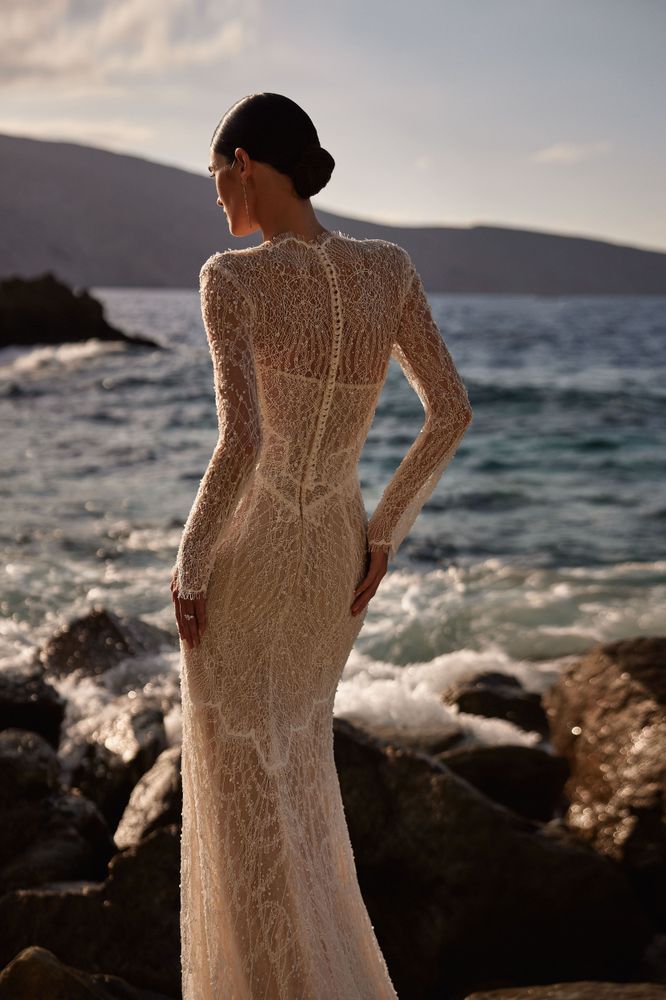
Romantic Sheer Lace Bridal Dress
Romantic Sheer Lace Bridal Dress Trends defines the dominant movement in contemporary bridal design, where transparency, dimensional lace, sculpted silhouettes, and controlled softness converge into gowns that prioritize texture, structure, and deliberate exposure over excessive embellishment.
Romantic Sheer Lace Bridal Dress Trends
The structural evolution of lace bridal dresses centers on transparency as architecture rather than decoration. Sheer bodices, illusion sleeves, and layered tulle foundations create depth without visual heaviness. Coverage is engineered through strategic applique placement instead of opaque lining. This technique reflects runway documentation found in bridal collections presented by Vogue, where designers repeatedly deploy lace to shape the body through placement rather than saturation.
Sheer construction demands technical precision. Lace motifs are individually positioned to contour the torso, reinforce seams, and frame negative space. The discipline mirrors couture practices outlined by the Council of Fashion Designers of America, where structural craftsmanship defines garment authority. Bridal ateliers integrate hidden corsetry beneath translucent layers, ensuring support without visual interruption.
Illusion necklines dominate this category. High lace collars, plunging V inserts stabilized with sheer mesh, and softly curved scoop necklines extend the visual line of the body. Transparency becomes a tool to lengthen proportion. This approach parallels fashion silhouette analysis archived by the Victoria and Albert Museum, which documents how lace historically shifted from surface ornament to structural enhancement.
Sleeve design expands under the sheer lace movement. Long fitted lace sleeves emphasize vertical alignment, while bishop sleeves introduce controlled volume. Transparency offsets fabric mass, preventing heaviness. Bridal runway coverage by Harper’s Bazaar highlights the reemergence of sleeves as a central focal point in lace gowns.
Fabric layering forms the foundation of romantic transparency. Designers stack fine tulle, chantilly lace, and organza to create dimensional depth. Light passes through layers, producing tonal variation without color contrast. Textile scholarship from the Textile Museum explains how chantilly lace historically achieved delicacy through fine thread density, a technique now reinterpreted in bridal contexts.
Three dimensional floral appliques intensify the romantic direction. Instead of flat embroidery, raised petals and laser cut motifs create shadow interplay. This dimensionality aligns with contemporary couture surface experimentation observed in houses documented by Dior. Bridal designers adapt similar textile layering while maintaining wearability.
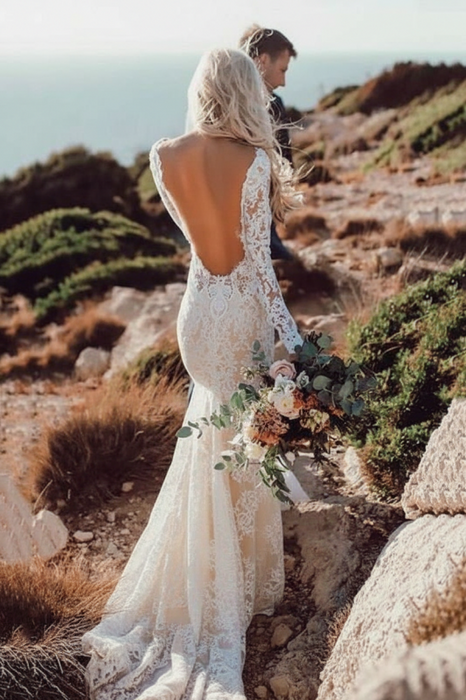
Back design becomes a strategic focal area in sheer lace gowns. Deep illusion backs framed by vine like lace patterns generate contrast between coverage and exposure. Button closures along the spine reinforce vertical symmetry. Bridal trend analysis published by The Knot confirms consistent demand for detailed back treatments in lace silhouettes.
Silhouettes under this movement favor fit and flare, mermaid, and soft A line cuts. Sheer lace overlays skim the body before expanding at the hem. The flare often begins below the hip to preserve clean proportion. Market analysis from Statista shows continued consumer preference for body defining shapes within bridal segments.
Neckline transparency balances modesty and sensuality. Illusion panels allow plunging shapes while maintaining structural security. The technique relies on color matched mesh that disappears under lighting. Photography professionals at Rangefinder note how illusion fabrics interact with digital sensors, requiring refined construction to avoid visible seams.
Train length in romantic lace gowns extends toward chapel and cathedral proportions. Lace motifs disperse gradually along the train, avoiding dense border patterns. The diffusion technique maintains visual continuity. Historical train usage is documented by the Metropolitan Museum of Art, illustrating how elongated silhouettes historically signaled formality.
Color remains within ivory and soft white spectrums, but tonal layering enhances dimension. Underlays may be slightly warmer than lace overlays, amplifying pattern visibility without sharp contrast. Color authority references from Pantone influence subtle shade differentiation even within neutral bridal palettes.
Corsetry integration supports sheer bodices. Boning channels are concealed beneath lace motifs, distributing tension evenly. Exposed boning appears selectively, merging lingerie aesthetics with bridal refinement. Couture structure documentation by Chanel explains how internal engineering sustains silhouette integrity beneath delicate fabrics.
Fabric sustainability intersects with lace production. Ethical sourcing of cotton threads and recycled synthetic fibers increasingly appears in bridal collections. Advocacy and supply chain transparency are promoted by Fashion Revolution, reflecting broader consumer demand for responsible production.
Detachable overskirts complement fitted lace gowns. The overskirt introduces ceremony volume while preserving reception mobility. This modular strategy mirrors adaptability trends in broader fashion sectors discussed by Fast Company. Functional transformation becomes embedded within romantic aesthetics.
Embellishment restraint differentiates modern romantic lace from historical excess. Beading appears in micro applications, highlighting floral centers or tracing neckline edges. Excessive crystal scatter declines. Luxury positioning relies on fabric quality and hand finishing rather than sparkle density.
Texture variation intensifies visual depth. Matte lace layered over subtle sheen satin underlays creates contrast through light absorption. The interplay mirrors textile innovation research highlighted by LVMH, where surface experimentation defines contemporary luxury.
Hair styling aligns with gown delicacy. Soft waves, low buns, and braided elements echo floral lace motifs. Beauty industry reporting from Allure documents continued bridal preference for understated styling that supports garment prominence rather than competes with it.
Veils remain integral. Cathedral length veils edged in matching lace extend the motif beyond the gown. Sheer fingertip veils preserve minimal interference with bodice detail. Retail trend summaries by Brides identify coordinated lace edging as a consistent accessory choice.
Cultural cross influence shapes lace aesthetics. European chantilly traditions merge with modern North American silhouette engineering. Global bridal reporting from WWD tracks how international ateliers exchange textile techniques and silhouette concepts.
Retail environments adapt to showcase transparency. Lighting design in bridal boutiques emphasizes shadow and depth to reveal lace layering. Retail strategy insights published by Forbes highlight experiential merchandising as a driver of luxury purchasing behavior.
Digital presentation intensifies scrutiny. High resolution product imagery exposes stitch density and applique placement. Ecommerce reporting from TechCrunch underscores the importance of zoom functionality in fashion retail, particularly for texture dependent garments like lace bridal gowns.
Comfort engineering remains central. Stretch lace blends allow mobility without compromising contour. Breathable linings prevent overheating under layered tulle. Textile performance research from the International Textile and Apparel Association identifies stretch integration as a primary factor in modern garment comfort.
Body inclusivity expands within romantic sheer lace design. Designers scale motif size and adjust placement across extended size ranges to maintain proportional harmony. Industry advocacy platforms such as Business of Fashion frequently address size representation gaps in luxury markets.
The hemline finish receives increased attention. Horsehair braid reinforces flared silhouettes, maintaining shape without excessive stiffness. Lace scalloping at the edge introduces subtle framing. Historical scallop edge techniques are preserved within textile archives at the Smithsonian National Museum of American History.
Climate adaptation informs lace density. Lightweight chantilly suits warmer regions, while heavier guipure supports cooler climates. Environmental textile discussions by the European Environment Agency address material impact and climate considerations within broader apparel production contexts.
Romantic sheer lace bridal gowns rely on balance between exposure and concealment. Transparency is measured, never chaotic. Floral motifs frame rather than overwhelm. Structure remains disciplined beneath softness. The resulting aesthetic communicates intimacy through precision rather than ornament saturation.
Three dimensional embroidery intensifies depth at strategic zones such as shoulders and waistlines. Laser cut petals are heat sealed to prevent fraying, ensuring longevity beyond the ceremony. Craft technique documentation from the Royal School of Needlework outlines the labor required for advanced applique integration.
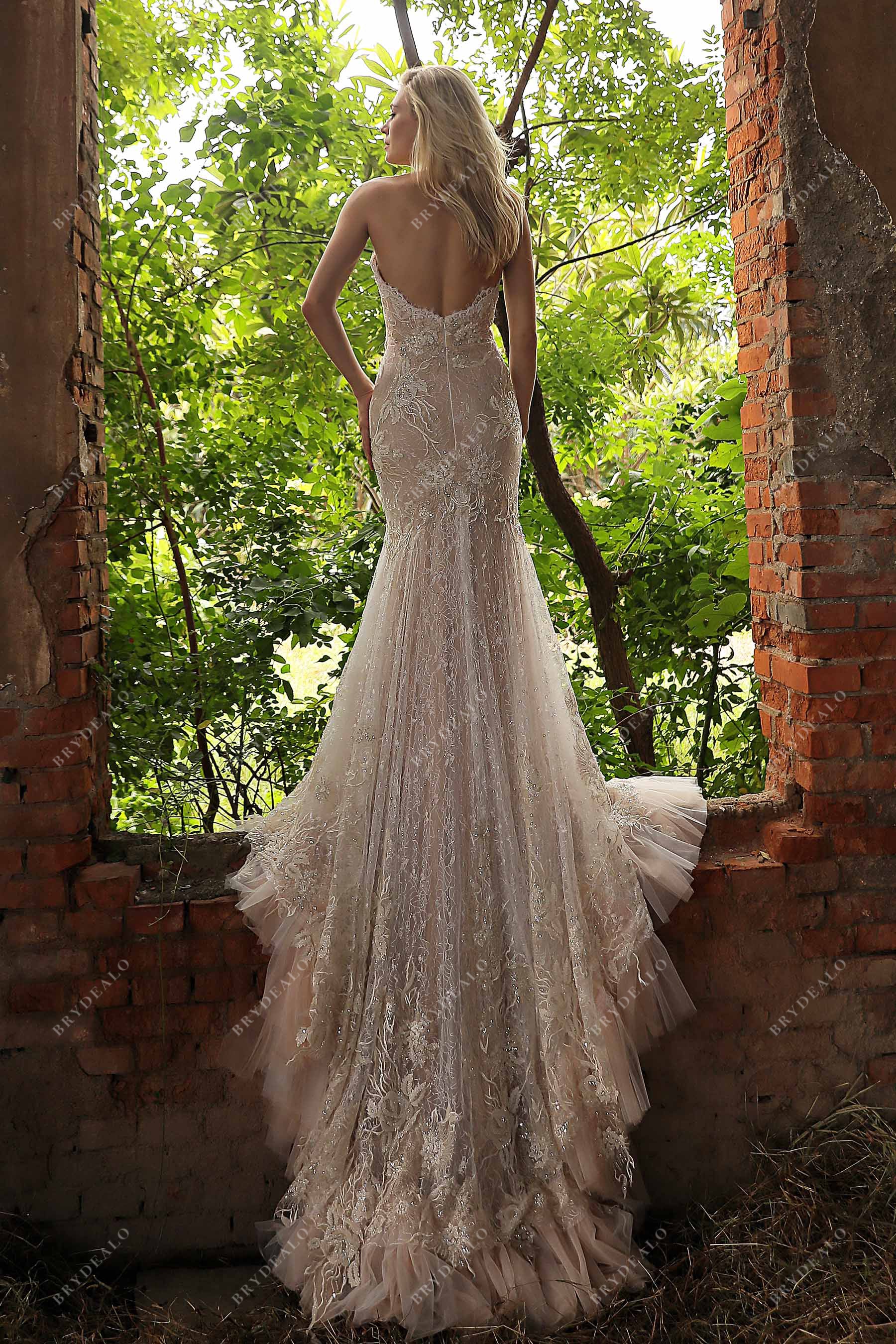
Waist definition emerges through seam shaping rather than heavy belts. Subtle contouring emphasizes anatomy while preserving lace continuity. Princess seams remain dominant because they provide vertical elongation without interrupting motif flow.
Photographic impact influences design decisions. Sheer layers diffuse light, softening image contrast. Wedding photography commentary from Rangefinder emphasizes how translucent textiles create atmospheric depth in both indoor and outdoor settings.
Minimal understructure padding replaces bulky petticoats. Volume emerges from layered tulle integrated directly into skirt panels. This method reduces garment weight and improves movement fluidity.
Back illusion panels often incorporate botanical symmetry, directing visual focus toward the spine. The spine becomes structural axis, reinforced by covered buttons or concealed zippers. This alignment reflects classical proportion theories preserved in fashion education institutions such as the Fashion Institute of Technology.
Luxury differentiation in Romantic Sheer Lace Bridal Dress design increasingly depends on visible hand finishing. In a Romantic Sheer Lace Bridal Dress, hand cut lace motifs aligned across seam lines signal measurable labor investment, while mass production alternatives substitute machine stitched overlays that diminish dimensional nuance.
Consumer education surrounding the Romantic Sheer Lace Bridal Dress market continues to expand. Brides evaluating a Romantic Sheer Lace Bridal Dress analyze fiber composition, lace origin, and atelier reputation before purchase, and market intelligence from McKinsey identifies informed purchasing as a defining behavior among contemporary luxury consumers.
The Romantic Sheer Lace Bridal Dress endures because it fuses emotional symbolism with technical discipline. Within a Romantic Sheer Lace Bridal Dress, lace anchors historical continuity while transparency projects modern autonomy, and the structural equilibrium between these forces sustains its dominance in bridal fashion.
About the Author