Diamond Alternatives for Modern Engagement Rings
Diamond Alternatives for Modern Engagement Rings defines a market category shaped by search demand for moissanite rings, lab grown diamonds, white sapphire engagement rings, cubic zirconia rings, morganite engagement rings, ethical gemstones, affordable engagement rings, sustainable engagement rings, and non traditional engagement rings. Consumer intent clusters around durability, cost efficiency, ethical sourcing, visual similarity to diamond, and long term wear performance. The shift from mined diamond dominance toward diversified gemstone selection reflects structural change in value perception rather than temporary aesthetic preference.
Market Drivers Behind Diamond Alternatives for Modern Engagement Rings
The engagement ring market historically centered on mined diamond supply chains controlled by vertically integrated conglomerates. Controlled distribution, marketing campaigns equating diamonds with permanence, and restricted supply narratives shaped consumer behavior for decades. Digital transparency and cost comparison platforms disrupted that structure. Price discovery became immediate. Alternative gemstones gained visibility.
Search data prioritizes moissanite engagement ring, lab grown diamond ring, white sapphire ring, and morganite ring variations. These keywords reflect consumer emphasis on affordability without sacrificing appearance. The cost differential between mined diamond and alternatives can exceed several multiples for equivalent size. Economic rationality drives substitution.
Retailers such as Charles and Colvard commercialized moissanite at scale, positioning it as a premium diamond simulant with superior brilliance metrics. Companies including Brilliant Earth expanded into lab grown diamonds, integrating ethical narratives with gemstone science.
The category divides into three structural groups:
- Lab created diamonds
- Natural non diamond gemstones
- Synthetic diamond simulants
Each category carries distinct physical properties, price dynamics, and cultural perception.
Lab Grown Diamonds and Technological Replication
Crystal Formation and Chemical Identity

Lab grown diamonds share identical chemical composition with mined diamonds: carbon atoms arranged in tetrahedral lattice. Production methods include high pressure high temperature synthesis and chemical vapor deposition. The result is optical and physical equivalence measurable through hardness, refractive index, and thermal conductivity.
Retail platforms such as Vrai emphasize renewable energy powered manufacturing facilities to reduce environmental impact relative to traditional mining. Because lab grown diamonds are chemically identical, gemological laboratories such as GIA grade them using the same clarity and color frameworks applied to mined stones.
Cost Structure
Absence of geological extraction reduces supply chain complexity. Production scalability increases inventory predictability. The price of lab grown diamonds typically undercuts mined equivalents while preserving identical optical performance.
However, resale markets treat lab grown diamonds differently due to expanded supply potential. Value retention differs from natural rarity constrained stones. Buyers prioritizing long term resale must account for this dynamic.
Ethical and Environmental Positioning
Marketing language emphasizes conflict free sourcing and reduced land disruption. Energy source determines actual emissions profile. Renewable powered facilities strengthen sustainability claims. Fossil fuel dependent production reduces advantage.
Lab grown diamonds eliminate reliance on mining regions associated with labor exploitation. Ethical framing attracts consumers prioritizing supply chain integrity.
Moissanite Rings and Optical Performance
Material Composition
Moissanite consists of silicon carbide. Naturally occurring specimens are rare; commercial moissanite is lab created. Hardness measures approximately nine and a quarter on the Mohs scale, slightly below diamond but adequate for daily wear.
Charles and Colvard pioneered commercial distribution of gem quality moissanite, branding it as premium alternative to diamond. The refractive index of moissanite exceeds diamond, producing higher fire dispersion. Visual output can appear more rainbow intense under light.
Durability and Maintenance
Moissanite resists scratching and chipping in typical engagement ring use. Thermal conductivity differs from diamond, enabling gemological identification. Surface coatings are unnecessary in high quality stones, reducing long term degradation risk.
Because moissanite is laboratory produced, color consistency and size availability remain stable. Consumers seeking larger center stones at constrained budgets gravitate toward this option.
Market Perception
Some consumers prefer moissanite for its unique brilliance signature rather than imitation value. Others view it as diamond substitute. Cultural acceptance varies by demographic and exposure to gemological education.
White Sapphire and Natural Diamond Alternatives
White Sapphire Engagement Rings
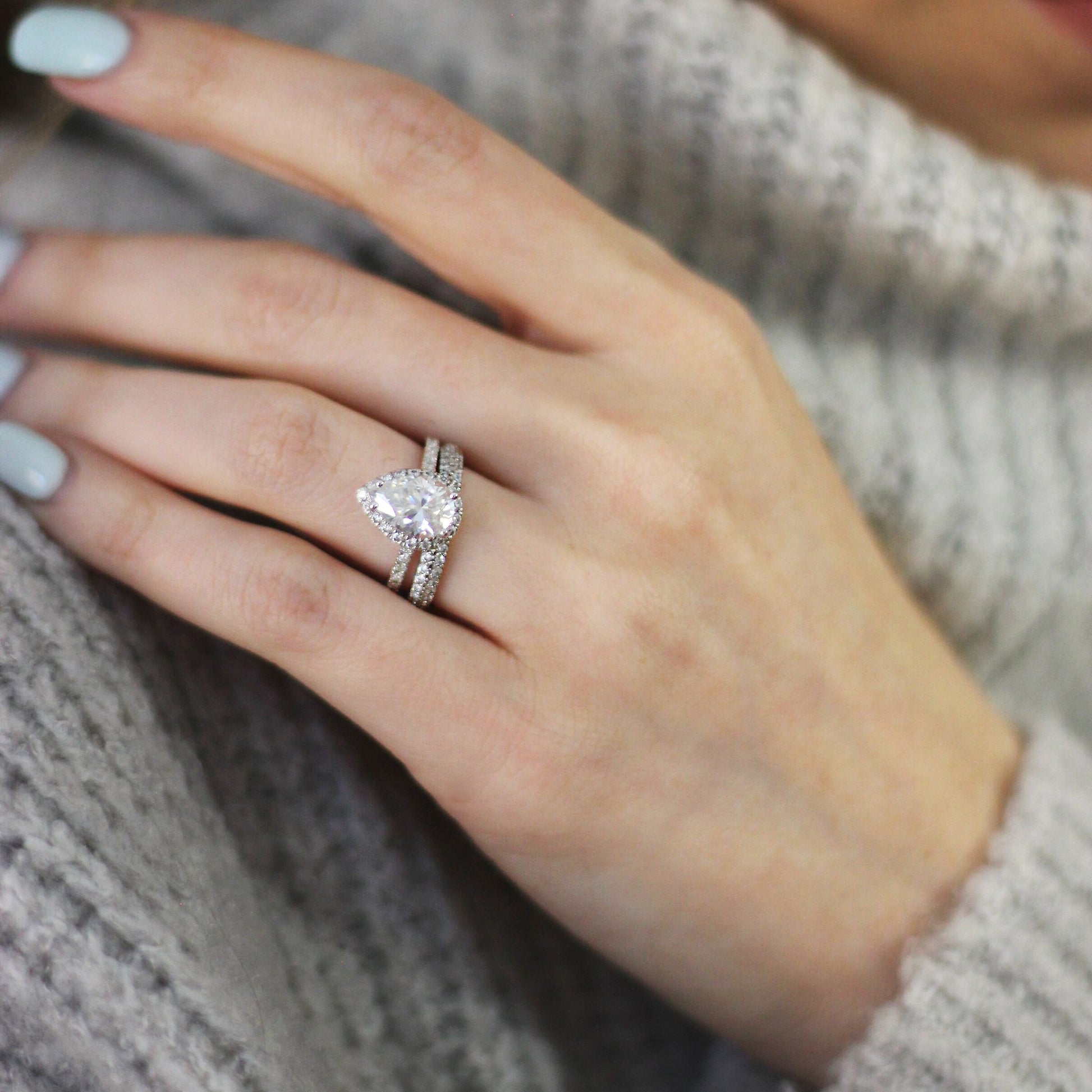
White sapphire engagement rings attract search interest due to natural gemstone origin and lower cost relative to diamond. Sapphire hardness measures nine on Mohs scale, providing adequate durability. However, refractive index and dispersion are lower than diamond, producing softer brilliance.
Retailers such as James Allen list white sapphire options alongside diamonds and lab grown stones, enabling side by side comparison. Transparency in grading influences consumer trust.
White sapphire may display slight inclusions or milky appearance compared to high clarity diamonds. Buyers prioritizing hardness over maximum sparkle may accept visual tradeoff.
Morganite Engagement Rings
Morganite engagement rings fall under colored gemstone alternatives. Morganite, a variety of beryl, exhibits blush pink to peach tones. Hardness approximates seven and a half to eight, lower than diamond and sapphire. Protective settings reduce abrasion risk.
Vendors including Brilliant Earth offer morganite center stones within ethical sourcing narratives. The appeal derives from romantic coloration and distinctive identity rather than diamond mimicry.
Aquamarine and Other Beryl Variants
Aquamarine, also beryl family, provides pale blue hue. Durability concerns mirror morganite due to shared mineral group. Engagement ring longevity depends on lifestyle and setting protection.
Natural colored gemstones differentiate engagement symbolism from traditional diamond narrative. Individuality supersedes conformity.
Cubic Zirconia and Budget Simulants
Composition and Performance
Cubic zirconia is zirconium dioxide stabilized in cubic crystal form. Hardness approximates eight to eight and a half on Mohs scale. Optical brilliance can resemble diamond initially but material is softer and prone to surface abrasion over time.
Mass market retailers distribute cubic zirconia engagement rings at low cost thresholds. Online platforms such as Amazon list extensive cubic zirconia inventory spanning numerous designs.
Wear Characteristics
Extended wear may produce clouding or scratching. Replacement cost remains minimal. Consumers using cubic zirconia for travel rings or temporary placeholders accept reduced longevity.
Cubic zirconia occupies lowest price tier among diamond alternatives. It functions as accessible option rather than heirloom grade stone.
Ethical Gemstones and Sustainable Framing
Traceable Colored Stones
Ethical gemstones extend beyond diamond discourse. Sapphires, spinels, and tourmalines sourced from regulated mines with documented labor standards satisfy sustainability criteria. Transparency documentation strengthens credibility.
Retailers integrating responsible sourcing frameworks publish mine origin details and social impact contributions. Ethical positioning influences premium pricing tolerance.
Recycled Settings and Metals
Diamond alternatives often pair with recycled gold or platinum to reinforce sustainability narrative. Brands such as Mejuri incorporate recycled metal commitments in product descriptions, linking gemstone choice with metal sourcing.
The integration of ethical gemstone and recycled setting compounds environmental benefit.
Optical Metrics and Comparative Analysis
Hardness
Diamond ranks ten on Mohs scale. Moissanite approximates nine and a quarter. Sapphire ranks nine. Cubic zirconia ranges lower. Hardness influences scratch resistance but not necessarily fracture toughness.
Refractive Index
Diamond refractive index measures approximately two point four two. Moissanite exceeds two point six. Sapphire measures around one point seven six. Cubic zirconia approximates two point one five. Higher refractive index correlates with increased brilliance.
Dispersion
Dispersion determines fire effect. Moissanite exhibits higher dispersion than diamond. Sapphire and morganite display lower dispersion. Visual preference varies; some favor subtle brilliance.
Cultural Reframing of Engagement Symbolism
Diamond engagement tradition emerged through marketing campaigns in the twentieth century. Alternatives challenge singular narrative linking commitment exclusively to diamond acquisition. Modern consumers prioritize personal alignment over conformity.
Non traditional engagement rings reflect broader cultural shift toward customization. Social media platforms amplify visibility of colored gemstones and unconventional center stones.
Jewelry retailers such as Blue Nile expanded offerings to include lab grown and alternative gemstones, responding to demand diversification.
Cost Efficiency and Budget Allocation
Diamond pricing historically followed controlled supply and branding influence. Alternatives disrupt pricing hierarchy. Budget reallocation enables larger stone size, intricate setting, or complementary wedding band investment.
Economic analysis requires assessment of long term durability, maintenance cost, and resale potential. Lab grown diamonds retain intrinsic diamond properties but face evolving resale landscape. Moissanite resale market remains narrower.
Budget flexibility increases experimentation tolerance. Consumers no longer constrained by fixed diamond cost thresholds.
Setting Compatibility and Structural Engineering
Hardness influences setting choice. Softer stones benefit from protective halos or bezel settings. Harder stones tolerate prong exposure. Engagement ring design must align with gemstone resilience.
Metal selection affects durability. Platinum offers density and scratch resistance. Gold alloys vary by karat content. Integration of alternative gemstone with robust setting optimizes longevity.
Certification and Grading Transparency
Lab grown diamonds receive grading reports from institutions such as IGI and GIA. Moissanite grading often includes color and clarity documentation from brand specific labs. Sapphire grading may assess origin and treatment disclosure.
Transparency reduces misrepresentation risk. Consumers evaluating diamond alternatives require documentation verifying stone type and any enhancement treatments.
Longevity and Heirloom Considerations
Heirloom potential depends on durability, timeless design, and cultural acceptance. Diamond retains entrenched intergenerational symbolism. Alternatives increasingly gain normalization as adoption expands.
Maintenance requirements differ. Softer stones may require periodic polishing or replacement. Harder stones demand minimal upkeep beyond cleaning.
Heirloom viability is not exclusive to diamond. Structural design and care determine longevity.
Resale and Market Liquidity
Secondary markets for mined diamonds are established but often yield lower resale than retail acquisition cost. Lab grown diamond resale channels remain developing. Moissanite resale limited due to abundant primary supply.
Colored gemstones fluctuate based on rarity and market demand. Investment orientation differs from emotional purchase orientation. Engagement rings function primarily as personal artifact rather than financial asset.
Design Innovation Enabled by Alternatives
Lower gemstone cost enables experimentation with unconventional cuts and larger carat weights. Designers explore elongated shapes, step cuts, and antique inspired silhouettes without prohibitive cost.
Independent jewelers on platforms such as Etsy offer customized alternative gemstone rings, expanding design diversity beyond standardized diamond solitaires.
Customization fosters identity expression. Engagement ring becomes individual artifact rather than standardized commodity.
Industry Outlook
Production scalability of lab grown diamonds continues to expand. Consumer education increases awareness of moissanite and sapphire durability profiles. Retail integration of alternative gemstones becomes standard rather than niche.
Diamond Alternatives for Modern Engagement Rings represents structural diversification of a historically centralized market. Material science, cost transparency, ethical scrutiny, and cultural individualism converge to reduce singular reliance on mined diamonds. Engagement symbolism persists independent of gemstone type, anchored instead in deliberate selection aligned with values, durability requirements, and economic logic.
About the Author