Layered Jewelry Look
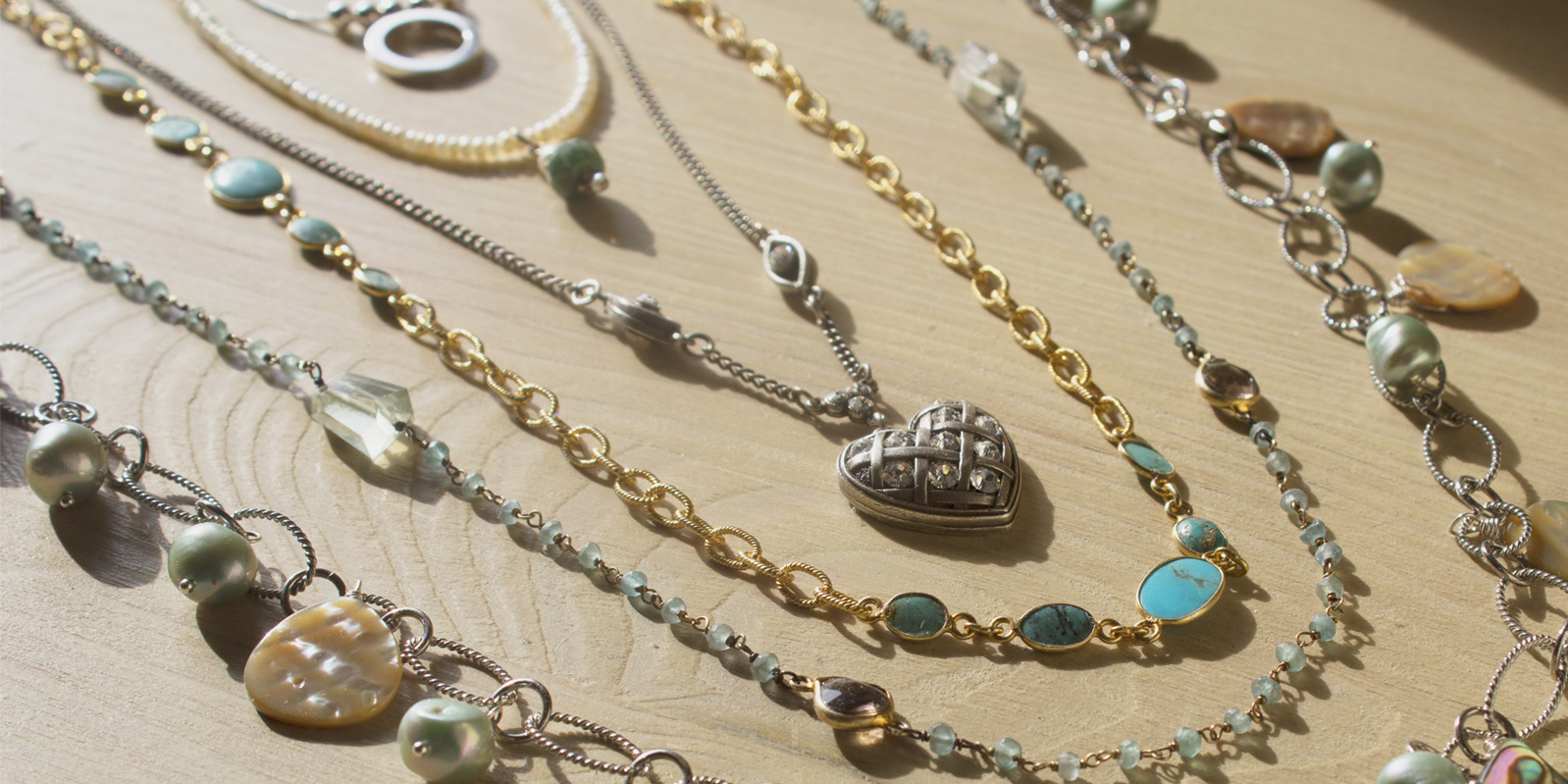
Layered Jewelry Look for Effortless Luxury defines a structural styling method built on repetition, proportion control, and material coherence rather than excess. Search demand clusters around layered necklace set, gold chain layering, necklace stack, layered bracelets, stacked rings, mixed metal layers, dainty layered necklaces, and minimalist layering jewelry. The direction signals system-based dressing where jewelry functions as compositional architecture, not isolated ornament.
Layered Jewelry Look for Effortless Luxury in Necklaces
Necklace layering anchors the layered jewelry system. Consumers search for layered gold necklaces, double chain necklace, three layer necklace, pendant layering, and choker with long chain combinations. The structure relies on vertical spacing and graduated lengths.
A functional framework uses three tiers. The top tier sits near the collarbone, typically a choker or short chain between fourteen and sixteen inches. The mid tier rests slightly below, often a fine chain with a small pendant. The bottom tier introduces a longer chain around twenty to twenty four inches to elongate the torso line.
Retailers such as Mejuri scale necklace stacking by offering pre designed layering sets that remove measurement uncertainty. Brands like Missoma engineer adjustable extenders to control spacing precision. Luxury houses including Tiffany and Co validate minimalist layering through fine gold pendants that function as central focal points without dominating adjacent chains.
Metal consistency stabilizes visual output. Solid gold chains in similar karat grades prevent color discordance. Mixing fourteen karat and eighteen karat pieces can produce subtle tonal differences. Intentional contrast requires controlled repetition.
Pendant selection determines narrative focus. A single medallion, diamond solitaire, or symbolic charm becomes anchor while surrounding chains maintain restraint. Excess pendant density collapses hierarchy and reduces clarity.
Commodity pricing influences gram weight strategy. When gold benchmarks shift through references such as the London Bullion Market Association, brands adjust chain thickness while preserving silhouette continuity. Lightweight layering maintains accessibility without aesthetic compromise.
Necklace layering performs optimally with open necklines. However, high collar garments can incorporate longer chains above fabric to create surface dimension. Layering is not limited to exposed skin; it operates as textile overlay.
The objective is measured repetition. Each chain adds incremental visual information without competing for dominance.
Bracelet Stacking and Wrist Composition
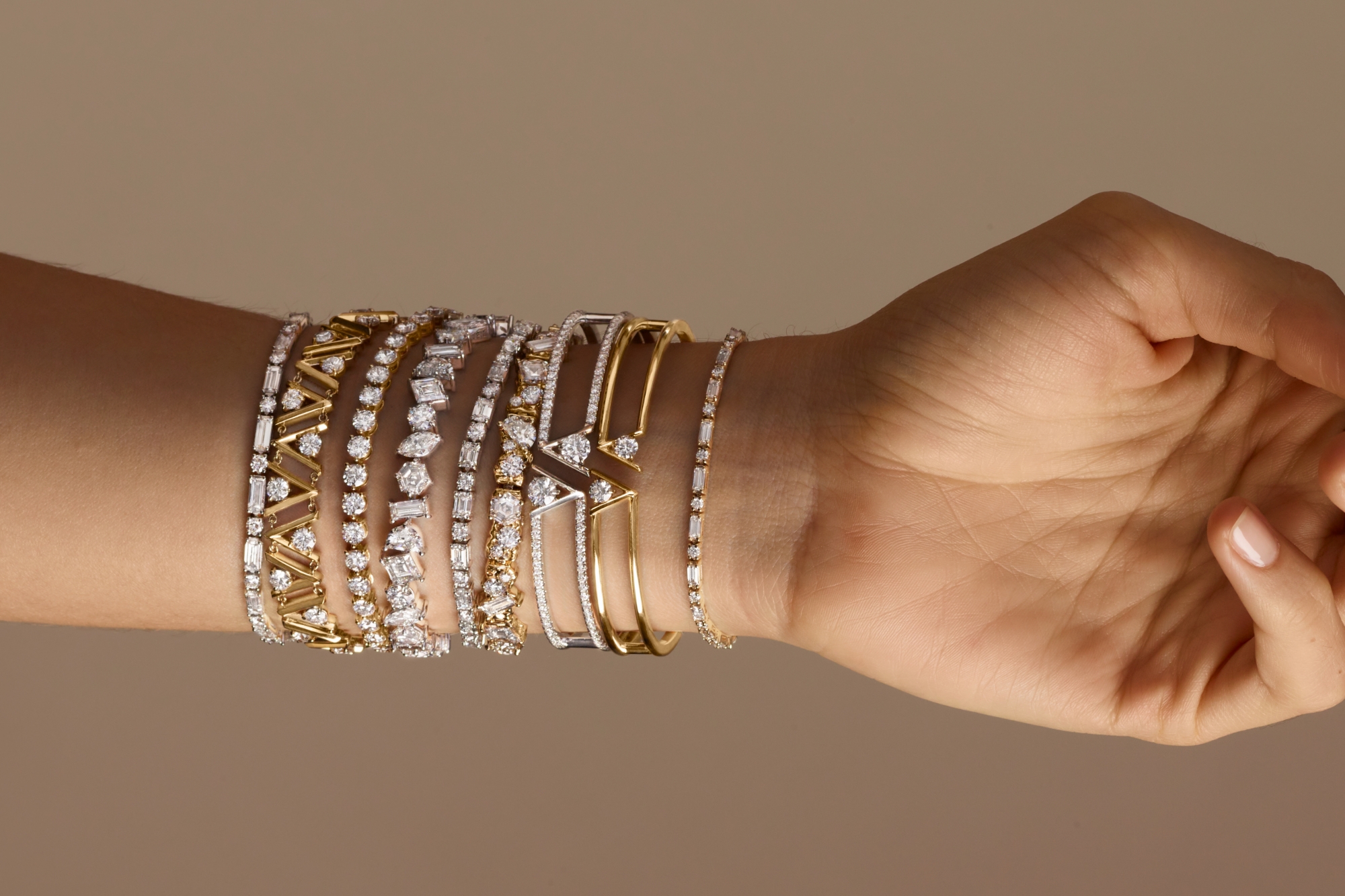
Bracelet layering extends the same compositional logic horizontally across the wrist. Search activity expands around stacked bracelets, gold bracelet stack, tennis bracelet layering, paperclip bracelet stack, and minimalist bangle stack. The wrist becomes active surface due to digital culture and constant device visibility.
A structured stack begins with a stable base such as a solid gold bangle. Adjacent to it, a flexible chain bracelet introduces movement. A diamond tennis bracelet adds linear sparkle. Variation in rigidity and flexibility prevents monotony.
Retailers including James Allen provide customizable tennis bracelets that integrate into stacking systems without overwhelming other pieces. Houses such as Cartier anchor luxury stacking with rigid bangles that maintain structural dominance within the arrangement.
Weight distribution matters. Excessive mass on one side creates rotational imbalance. Fine jewelry intended for daily stacking must include secure clasps and reinforced hinges. Lobster clasps with safety latches reduce detachment risk under friction.
Texture variation enhances stack complexity. Combining polished surfaces with brushed finishes diffuses light and prevents reflective overload. Mixed link styles such as curb, paperclip, and box chain introduce micro contrast without abandoning cohesion.
Spacing can remain compressed or intentionally separated. Negative space between bracelets produces clarity. Compression increases density and visual impact. The decision depends on context and garment interaction.
Bracelet stacking also intersects with investment logic. Each additional solid gold piece increases cumulative intrinsic value. Smaller incremental purchases accumulate material wealth distributed across multiple wearable assets.
The wrist stack must tolerate continuous motion. Fine jewelry built for layering prioritizes durability over fragility.
Stacked Rings and Finger Architecture

Ring stacking translates layering principles into vertical finger architecture. Search clusters include stackable gold rings, thin stacking bands, diamond stacking ring, midi rings, and mixed metal ring stack. The practice transforms individual rings into composite structure.
A coherent stack relies on band width variation. Thin bands function as spacers. Medium bands provide structural anchors. Diamond accented bands introduce controlled brilliance. Overly wide stacking eliminates articulation and restricts finger mobility.
Brands such as Monica Vinader and Blue Nile design collections specifically calibrated for stacking tolerances. Band curvature and interior comfort fit reduce pressure when multiple rings occupy the same finger.
Eternity bands integrate effectively within stacks due to continuous stone distribution. Retailers like Brilliant Earth scale lab grown and natural diamond eternity options that balance cost and visual density.
Ring stacking extends beyond single finger concentration. Distribution across multiple fingers prevents congestion. Midi rings placed above the knuckle add vertical layering dimension.
Metal consistency again stabilizes output. Mixing yellow gold with white gold or rose gold requires repetition pattern to avoid randomness. A mixed metal stack should alternate deliberately rather than scatter.
Stacked rings encode chronology. Each band can represent milestone or personal marker. The visual accumulation becomes narrative timeline worn openly.
Fine jewelry stacking must account for friction between bands. Smooth interior edges reduce abrasion. Regular maintenance preserves polish integrity.
Finger architecture demands restraint. Clarity emerges through proportional control.
Mixed Metals and Textural Layering

Mixed metal layering introduces tonal contrast within the layered jewelry system. Search demand includes mixed metal necklace, gold and silver layered chains, two tone ring stack, and layered bracelets mixed metals. The technique expands palette without increasing volume.
The structural rule is repetition. If yellow gold and white gold are combined, each metal must appear at least twice within the composition to avoid isolated anomaly. Balance eliminates visual fragmentation.
Luxury houses such as Bvlgari have historically integrated mixed metal designs into high jewelry collections, validating the approach within fine craftsmanship standards. Contemporary brands like Mejuri adapt similar logic into accessible everyday layering formats.
Texture layering operates alongside metal contrast. Hammered surfaces paired with polished chains create light variance. Matte finishes reduce glare and provide grounding element within brighter stacks.
Gemstone inclusion introduces additional layer dimension. Small diamond accents distributed across multiple pieces maintain coherence better than a single oversized stone dominating the arrangement. Certification standards from the Gemological Institute of America maintain trust in gemstone quality within layered systems.
Mixed metals also mitigate monotony in long term wear. As wardrobe colors shift, dual tone jewelry adapts without full replacement. Versatility increases utility lifespan.
However, uncontrolled mixing degrades clarity. Layering requires intentional patterning, not improvisation.
Proportion, Balance, and Daily Wear Strategy
Layered jewelry is architectural. Without proportion discipline, output collapses into clutter. The principle is hierarchical dominance supported by secondary repetition.
Necklaces require graduated length separation of at least two inches to avoid entanglement. Bracelets must alternate rigid and flexible structures to maintain comfort. Rings should preserve finger articulation.
Daily wear strategy includes removal during high impact activity. Fine jewelry tolerates motion but not negligence. Solid gold resists corrosion; however, surface scratches accumulate through abrasion.
Ethical sourcing and durability influence long term viability. Brands adhering to standards from the Responsible Jewellery Council reduce supply chain risk exposure.
Digital culture amplifies layered aesthetics through visual platforms such as Instagram, where repetition of stacking visuals normalizes the method globally. Visibility drives imitation; imitation drives search expansion.
Commodity awareness informs timing. Monitoring gold price movements through data provided by the London Bullion Market Association can influence acquisition pacing for heavier stacking investments.
Layered jewelry does not rely on singular statement dominance. It distributes visual interest across multiple micro elements. The cumulative effect produces sophistication without spectacle.
Layered Jewelry Look for Effortless Luxury functions as system rather than trend. It integrates necklace stacking, bracelet composition, ring architecture, metal contrast, and proportional discipline into coherent daily uniform. Precision replaces excess. Structure replaces randomness. Material integrity replaces costume volatility.
About the Author